
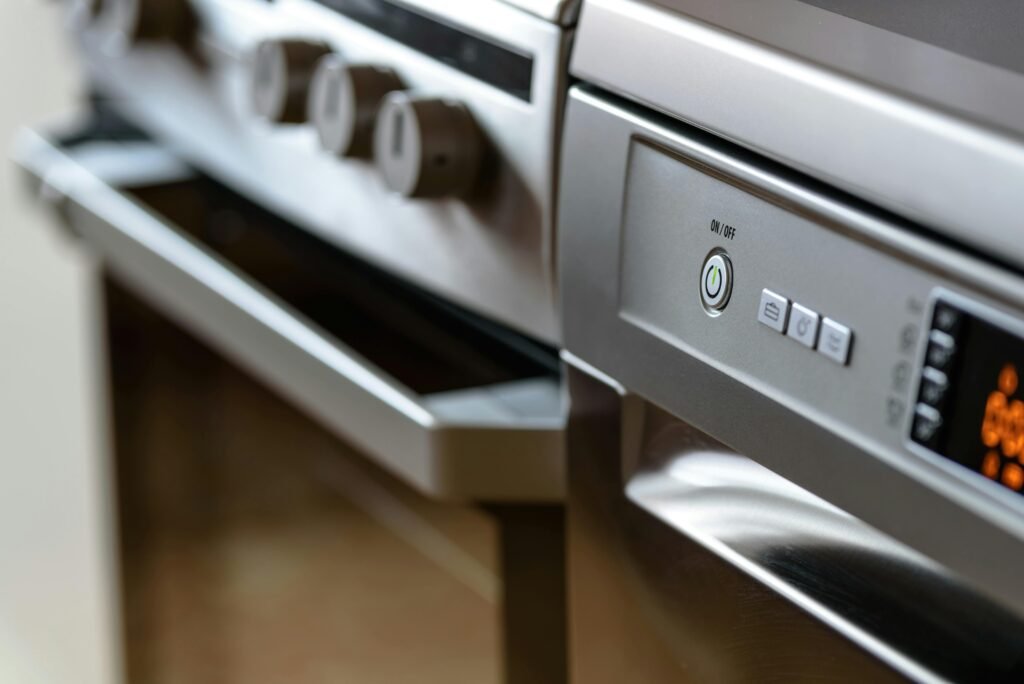
Cooking appliances are the heart of any kitchen, and ovens are among the most essential. Whether you’re baking bread, roasting chicken, or simmering sauces, the type of oven you choose—gas, electric, or induction—can dramatically affect your cooking experience. Each has unique strengths and drawbacks, and beyond performance, maintenance and cleaning play a crucial role in long-term usability. Let’s explore the pros and cons of these ovens and stoves, along with practical cleaning tips to keep them working efficiently.
🔥 Gas Ovens
How They Work
Gas ovens use natural gas or propane to fuel burners. The flame heats the oven cavity, creating a moist cooking environment.
Pros:
- Instant heat response for precise cooking.
- Moist cooking environment, ideal for roasting meats.
- Lower operating costs where gas is affordable.
Cons:
- Uneven baking with delicate pastries.
- Safety concerns from leaks and pollutants.
- Requires a gas line installation.
Cleaning & Professional Deep Cleaning Benefits:
- This reduces fire hazards and improves cooking efficiency.
- Gas ovens often accumulate grease around burners and grates.
- While regular wipe‑downs help, professional oven deep cleaning removes stubborn carbon deposits, sanitizes burner components, and ensures safe gas flow.
⚡ Electric Ovens
How They Work
Electric ovens rely on heating elements powered by electricity. Many models include convection fans for even heat distribution.
Pros:
- Consistent heat, excellent for baking.
- Easy installation with standard outlets.
- Smooth cooktops are simple to clean.
Cons:
- Slower heating and higher energy bills.
- Less responsive to quick adjustments.
- Dependent on electricity (useless during outages).
Cleaning & Professional Deep Cleaning Benefits:
- This means better baking results and lower energy wasteT
- Electric ovens often suffer from baked‑on residue on heating elements.
- Professional deep cleaning extends the life of elements, prevents smoke from burnt food, and restores even heat distribution.
🧲 Induction Stoves (with Electric Ovens)
How They Work
Induction stoves use electromagnetic fields to heat cookware directly. The oven component is usually electric, but the stovetop is what sets induction apart.
Pros
- Energy efficiency: Transfers heat directly to cookware.
- Precise control: Rapid adjustments for delicate cooking.
- Safety: Surfaces remain cool to the touch.
- Speed: Boils water faster than gas or electric.
- Eco-friendly: Efficient and lower emissions.
Cons
- High upfront cost: More expensive than gas or electric.
- Cookware limitations: Requires magnetic pots and pans.
- Learning curve: Less intuitive for traditional cooks.
- Noise: Can produce humming sounds.
Cleaning Tips
- Induction cooktops are smooth but prone to scratches and streaks.
- Professional oven deep cleaning ensures the electric oven component is spotless, while specialized cleaners protect the induction surface.
- This keeps your investment looking new and performing at peak efficiency.
- Oven cleaning: Since the oven is electric, follow the same cleaning practices as electric ovens—wipe spills quickly and use mild cleaners.
📊 Comparison Table
| Feature | Gas Oven | Electric Oven | Induction Stove |
|---|---|---|---|
| Heat Control | Instant, responsive | Slower adjustments | Precise, rapid |
| Cooking Style | Best for roasting, broiling | Best for baking, pastries | Best for precision cooking |
| Energy Efficiency | Moderate | Moderate | High |
| Operating Cost | Lower (if gas is cheap) | Higher (electric bills) | Lower long-term |
| Safety | Risk of leaks/pollutants | Hot surfaces | Cool surface, safer |
| Installation | Requires gas line | Easy, standard outlets | Requires special cookware |
| Eco-Friendliness | Lower | Moderate | Higher |
| Cleaning Ease | Moderate (grates, burners) | Moderate (glass cooktops) | Easy (smooth surfaces) |
🏠 Choosing the Right Oven
When selecting an oven, consider:
- Cooking habits: Bakers may prefer electric ovens, while roasters lean toward gas.
- Budget: Gas may save money long-term; induction requires higher upfront investment but saves energy later.
- Safety/environment: Induction is safest and most eco-friendly.
- Cleaning preference: Induction is easiest to clean, while gas requires more effort.
⚠️ Risks and Trade-Offs
- Gas ovens: Risk of leaks and harder cleaning due to grates and burners.
- Electric ovens: Higher bills and slower responsiveness, but easier to clean smooth cooktops.
- Induction stoves: Costly upfront, cookware restrictions, but simplest to clean.
📊 Why Professional Oven Deep Cleaning Matters
- Cooking habits: Bakers may prefer electric ovens, while roasters lean toward gas.
- Budget: Gas may save money long-term; induction requires higher upfront investment but saves energy later.
- Safety/environment: Induction is safest and most eco-friendly.
- Cleaning preference: Induction is easiest to clean, while gas requires more effort.
Conclusion
Gas ovens excel in responsiveness, electric ovens shine in baking consistency, and induction stoves lead in efficiency. But regardless of type, the benefits of professional oven deep cleaning are undeniable: safer cooking, better performance, and longer appliance life. Regular maintenance paired with expert deep cleaning ensures your oven remains the reliable centerpiece of your kitchen.
In short: choose the oven that fits your cooking style, budget, and cleaning tolerance.