
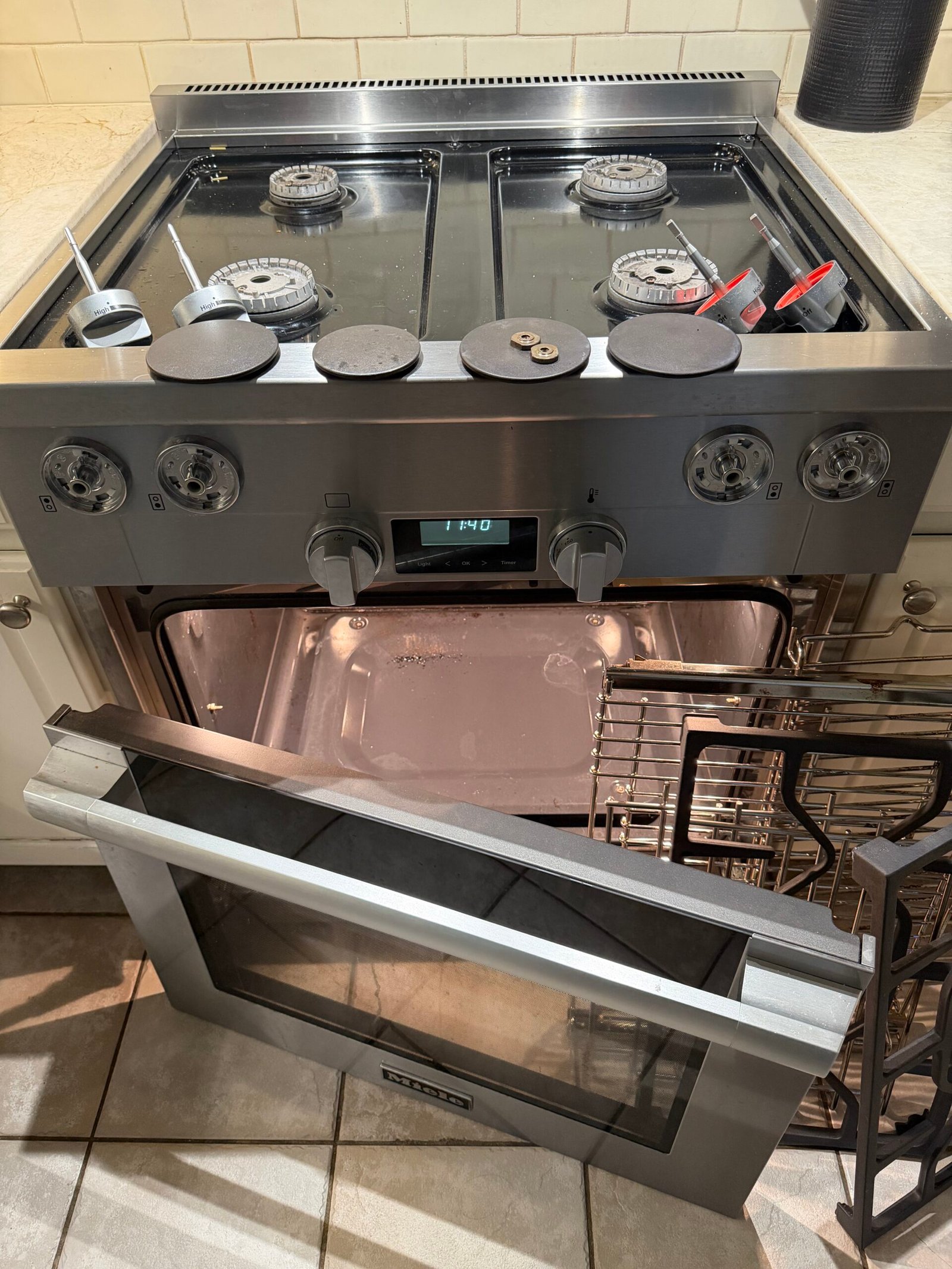
Your oven is the heart of your kitchen, but it’s also one of the hardest appliances to keep spotless. Grease splatters, baked‑on food, and residue from countless meals accumulate over time, affecting performance, safety, and even flavor. While modern ovens offer features like self‑cleaning cycles, many components — such as stainless‑steel racks and cast iron grates — require special care. This guide answers common questions and provides a detailed roadmap for maintaining your oven, while highlighting when professional oven and range cleaning services are the best solution.
How to Use Self‑Clean: Pros, Cons, and Best Practices
What Is the Self‑Clean Function?
Most modern ovens include a pyrolytic self‑cleaning cycle, which heats the oven to extremely high temperatures (up to 900°F) to incinerate food residue into ash. Some models also offer steam‑clean cycles, which use moisture at lower temperatures to loosen grime.
How to Use Self‑Clean Safely
- Remove racks and accessories — High heat can discolor stainless‑steel racks or damage enamel.
- Wipe spills first — Large food debris can produce smoke and odors.
- Ventilate the kitchen — Open windows or run a fan to reduce fumes.
- Run the cycle — Depending on soil level, cycles last 2–6 hours.
- Wipe ash afterward — Use a damp cloth to remove the fine residue.
Pros of Self‑Clean
- Convenient and chemical‑free.
- Thorough removal of baked‑on residue.
- Saves time compared to manual scrubbing.
Cons of Self‑Clean
- High energy consumption.
- Strong odors and smoke during the cycle.
- Potential wear on enamel and components.
- Requires preparation and cooling time.
Professional Tip: Even with self‑clean, ovens benefit from periodic manual or professional deep cleaning to address areas the cycle misses, such as door glass, racks, and seals.
How to Clean Stainless‑Steel Racks
Why Racks Need Special Care
Self‑clean cycles can damage or discolor stainless‑steel racks. Manufacturers recommend removing them before running the cycle. Racks often collect the most grime — melted cheese, sauces, and baked‑on grease.
Methods for Cleaning Racks
- Soak in hot water + dish soap
- Place racks in a bathtub or large sink.
- Add hot water and a few tablespoons of dish soap.
- Soak for several hours, then scrub with a non‑abrasive sponge.
- Baking soda + vinegar paste
- Apply paste to racks.
- Let sit for 30 minutes.
- Scrub gently with a nylon brush.
- Dishwasher detergent soak
- Dissolve dishwasher detergent in hot water.
- Submerge racks overnight.
- Rinse and dry thoroughly.
- Commercial stainless‑steel cleaner
- Use products designed for stainless steel.
Maintenance Tips
- Clean racks every 2–3 months to prevent buildup.
- Dry thoroughly to avoid rust spots.
- For polished finishes, buff with a microfiber cloth.
Professional Tip: If racks are heavily encrusted, professional cleaning services use industrial‑grade solutions and ultrasonic baths to restore shine without damage.
How to Clean Cast Iron Grates and Components
Why Cast Iron Needs Special Care
Cast iron is durable but prone to rust if not cleaned and seasoned properly. Many ranges include cast iron grates, burners, or oven components that require different care than stainless steel.
Cleaning Cast Iron Grates
- Remove loose debris — Brush off crumbs and grease.
- Soak in hot water + mild soap — Avoid harsh chemicals.
- Scrub with a stiff nylon brush — Never use heavy abrasive tools, which strip seasoning.
- Dry completely — Moisture causes rust.
- Re‑season if needed — Rub with a thin layer of vegetable oil and bake at 350°F for 1 hour.
Cleaning Cast Iron Oven Components
- Burner caps and plates: Wipe with damp cloth, dry thoroughly.
- Cast iron oven interiors (rare): Avoid soap; use baking soda paste for stubborn stains.
- Restoration method: Some professionals use the oven’s self‑clean cycle to burn off residue from cast iron cookware, but this must be done carefully to avoid cracking.
Maintenance Tips
- Never soak cast iron for long periods.
- Always dry immediately after washing.
- Re‑season regularly to maintain non‑stick surface and prevent rust.
Professional Tip: Professional services use steam cleaning and re‑seasoning techniques to restore cast iron grates, ensuring they remain durable and rust‑free.
Why Professional Oven and Range Cleaning Matters
Even with diligent DIY care, ovens accumulate hidden grime in:
- Door glass layers.
- Fan assemblies.
- Seals and gaskets.
- Behind racks and grates.
Professional cleaning services provide:
- Deep cleaning beyond self‑clean cycles.
- Safe restoration of stainless steel and cast iron.
- Improved appliance efficiency and safety.
- Extended lifespan of luxury ranges.
FAQs
Q: How to use self‑clean on my oven? Remove racks, wipe spills, ventilate, run the cycle, and wipe ash afterward.
Q: How to clean my stainless‑steel racks? Soak in hot water with soap or detergent, scrub with non‑abrasive tools, and dry thoroughly.
Q: How to clean my cast iron grates and components? Scrub with mild soap and nylon brush, dry immediately, and re‑season with oil.
Conclusion
Cleaning your oven is more than running a self‑clean cycle. Stainless‑steel racks and cast iron grates demand specialized care to avoid damage and preserve performance. While DIY methods work for routine maintenance, professional oven and range cleaning services deliver the deep restoration needed to keep your appliance safe, efficient, and beautiful.