Introduction
When investing in a cooking range, performance and design are only part of the story. Maintenance — how the oven is cleaned and cared for — plays a huge role in longevity, safety, and efficiency. Ultra high‑end brands like Wolf, Miele, La Cornue, Lacanche, BlueStar, Viking, and Thermador emphasize craftsmanship and advanced cleaning systems, while traditional brands such as GE, Whirlpool, Frigidaire, Maytag, and KitchenAid focus on practical, accessible cleaning features. Understanding manufacturer specifications and the pros and cons of self‑cleaning ovens helps homeowners make smarter choices.
Ultra High‑End Oven and Range Brands
Wolf (USA)
- Cleaning Specs: Wolf ovens feature pyrolytic self‑cleaning cycles. Racks must be removed to prevent discoloration.
- Manufacturer Guidance: Wipe spills before running the cycle to reduce smoke.
- Interesting Fact: Wolf’s dual‑stacked burners are designed to minimize spillover, reducing mess inside the oven.
Miele (Germany)
- Cleaning Specs: Offers both pyrolytic cleaning and HydroClean steam systems.
- Manufacturer Guidance: Steam cleaning is recommended for light messes; pyrolytic for heavy buildup.
- Interesting Fact: Miele’s ovens are engineered with smooth enamel interiors for easier manual wiping.
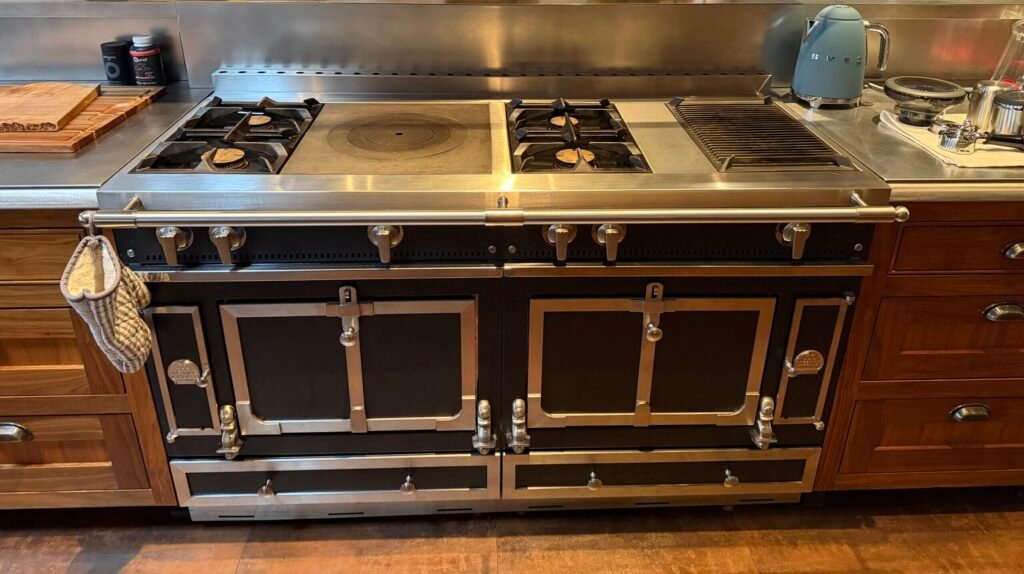
La Cornue (France)
- Cleaning Specs: No self‑cleaning cycle; requires manual cleaning with mild soap and warm water.
- Manufacturer Guidance: Avoid abrasives to protect enamel and brass finishes.
- Interesting Fact: Each La Cornue range is hand‑built, making careful manual cleaning essential to preserve craftsmanship.
Lacanche (France)
- Cleaning Specs: Manual cleaning only. Stainless steel surfaces should be cleaned with neutral detergents.
- Manufacturer Guidance: Avoid steel wool or harsh chemicals.
- Interesting Fact: Lacanche ranges are customizable, so cleaning methods vary depending on chosen finishes.
BlueStar (USA)
- Cleaning Specs: Heavy‑duty ranges require manual cleaning; no self‑clean cycle.
- Manufacturer Guidance: Use non‑abrasive cleaners; enamel is durable but should be protected.
- Interesting Fact: BlueStar ovens can reach extremely high BTUs, which means spills can carbonize quickly if not cleaned promptly.
Viking (USA)
- Cleaning Specs: Pyrolytic self‑cleaning cycles available. Racks must be removed.
- Manufacturer Guidance: Ventilate the kitchen during cleaning to reduce odors.
- Interesting Fact: Viking was the first to bring professional‑grade ranges into homes, including self‑cleaning features.
Thermador (USA/Germany)
- Cleaning Specs: Pyrolytic self‑cleaning cycles.
- Manufacturer Guidance: Wipe spills before cycle; remove accessories.
- Interesting Fact: Thermador introduced stainless steel to home appliances, making cleaning easier.
Traditional Oven and Range Brands
GE Appliances (USA)
- Cleaning Specs: Offers both steam clean and pyrolytic self‑clean cycles.
- Manufacturer Guidance: Steam clean for light messes; self‑clean for heavy soil.
- Interesting Fact: GE pioneered the self‑cleaning oven in the 1960s.
Whirlpool (USA)
- Cleaning Specs: Steam clean and self‑clean cycles.
- Manufacturer Guidance: Steam clean is eco‑friendly; self‑clean requires racks to be removed.
- Interesting Fact: Whirlpool owns multiple brands, including KitchenAid and Maytag.
Frigidaire (USA/Sweden)
- Cleaning Specs: Steam clean and self‑clean cycles.
- Manufacturer Guidance: Choose cycle length based on soil level; ventilate during self‑clean.
- Interesting Fact: Frigidaire was so popular that “Fridge” became a generic term for refrigerators.
Maytag (USA)
- Cleaning Specs: Steam clean and self‑clean cycles.
- Manufacturer Guidance: Steam clean for quick jobs; self‑clean for deep cleaning.
- Interesting Fact: Maytag’s marketing emphasized reliability, making cleaning features part of its appeal.
KitchenAid (USA)
- Cleaning Specs: Steam clean and self‑clean cycles.
- Manufacturer Guidance: Steam clean loosens debris with water; self‑clean burns residue into ash.
- Interesting Fact: KitchenAid’s ovens often include convection features, which can reduce mess by cooking more evenly.
Self‑Cleaning Ovens: Pros and Cons
Pros
- Convenience: Minimal scrubbing required.
- Chemical‑free: No harsh cleaners needed.
- Thorough: Burns off baked‑on residue.
- Time‑saving: Automated process.
Cons
- Energy use: Pyrolytic cycles consume significant electricity.
- Odors: Burning residue can produce smoke and smells.
- Wear: High heat may stress enamel and components.
- Preparation: Racks and accessories must be removed.
- No guarantee: Does not result in complete grease removal and may discolor some elements
Comparison Table
| Feature | Ultra High‑End Brands | Traditional Brands |
|---|---|---|
| Price Range | $5,000 – $50,000+ | $600 – $3,500 |
| Cleaning Systems | Mostly manual or pyrolytic; some steam options (Miele) | Steam clean + pyrolytic |
| Manufacturer Advice | Gentle cleaning for artisanal finishes | Flexible options for everyday use |
| Performance | Professional‑grade precision | Reliable everyday cooking |
| Audience | Culinary enthusiasts, luxury homeowners | Families, budget‑conscious buyers |
| Innovation | Custom finishes, advanced cleaning tech | Practical, eco‑friendly steam cycles |
Why Professional Cleaning Still Matters
Even with self‑cleaning cycles, ovens accumulate grease, carbon buildup, and hidden residue. Professional cooking range cleaning ensures:
- Longer appliance lifespan.
- Safer cooking environment.
- Better performance and efficiency.
From French luxury icons like La Cornue and Lacanche to American innovators like GE and Whirlpool, oven brands reflect their heritage and cleaning philosophies. Ultra high‑end ranges emphasize craftsmanship and advanced systems, while traditional brands balance affordability with practical steam and self‑clean cycles. Self‑cleaning ovens offer convenience but come with trade‑offs. Regardless of brand, pairing your investment with professional cleaning services ensures your appliance remains safe, efficient, and beautiful for years to come.